.png?width=150&height=70&name=BWC%20Logo%20(Custom).png)
Automotive Aluminium Extrusions – Custom Profiles
CNC Machining & Finishing Support
Aluminium Extrusions and Profiles for Mechanical Engineering
Automotive and vehicle-adjacent manufacturing demands parts that are lightweight, repeatable, and efficient to assemble. Automotive aluminium extrusions deliver consistent geometry over length and allow designers to integrate ribs, channels, mounting lands and functional interfaces directly into the profile—often reducing brackets, welding and fabrication steps.
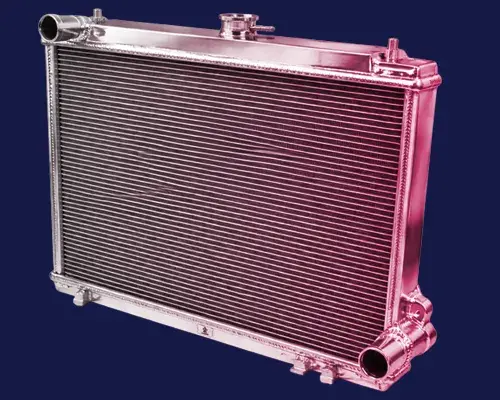
We supply bespoke aluminium extrusions for automotive programmes where weight, strength and thermal performance matter. Alongside structural profiles, we produce extruded components for cooling and thermal-management assemblies, including parts used within water coolers, oil coolers and charge-air coolers (intercoolers). We support the full route, design-for-extrusion guidance, tolerance strategy, CNC machining, finishing coordination and inspection—to help projects move from prototype through to repeat production with confidence.
Design Assistance & Prototyping | Machining: Cut/Mill/Drill/Tap | Finishes: Powder Coating & Anodising | Stockholding & Call-Off Supply

Where aluminium extrusion adds value in automotive
- Lightweighting through engineered section geometry
- Integrated features that reduce brackets, welding and fabrication steps
- Repeatable profile geometry for consistent assembly and scalable production
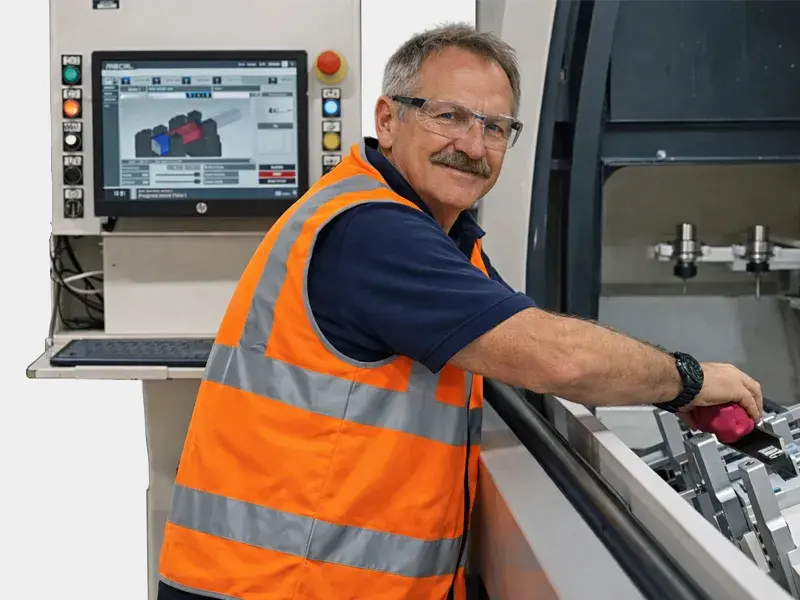
- Efficient manufacture: extrusion for the base profile, CNC machining for interfaces
- Thermal and cooling applications where section geometry supports heat transfer and packaging constraints
Automotive aluminium extrusion parts we supply (prototype to production)
- Structural and semi-structural profiles
- Mounting rails, carriers and reinforcement profiles
- EV battery enclosure-related sections suited to extrusion plus machining
- Cooler-related extruded components used within water, oil and charge-air systems
- Transport, off-highway and rail applications requiring lightweight strength and durability
Common extrusion profile features for automotive designs
- Reinforcement ribs/webs for stiffness-to-weight performance
- Integrated channels for routing, drainage or assembly features
- Defined datum/reference surfaces to support machining and inspection
- Multi-function geometry to reduce separate brackets and fixings
- Geometry designed for cut-to-length plus repeat machining
Design for extrusion: section stability and manufacturability
- Balance wall thickness to reduce twist and improve straightness over length
- Use internal radii (avoid sharp internal corners) to support flow and die life
- Avoid abrupt thickness transitions that increase distortion risk and cost
- Identify what must be controlled tightly vs what can remain open
- Plan machining access early for holes, slots, threads and interface features
Automotive extrusion tolerances, straightness and inspection
- Define datum/reference surfaces that match machining set-up and real assembly location
- Tighten tolerances only on functional interfaces (fit, alignment, sealing/contact areas)
- Keep non-critical geometry more open to improve yield and reduce cost
- For long lengths, specify straightness/twist only where fit-up depends on it
- If finishing is required, account for coating build-up on locating/mating surfaces
Secondary operations and supply support
- Cut-to-length and repeat batching
- CNC machining: holes, slots, tapped features and functional interfaces
- Deburring and assembly preparation
- Protective films and packaging where visible surfaces matter
- Finishing coordination where required
Why BWC Profiles
- Practical design collaboration to achieve stable, extrudable profiles
- Support from prototype and samples through to repeat production
- Machining and finishing routes aligned to assembly needs
- Clear guidance on tolerance strategy, inspection focus and cost drivers
Ready to discuss your automotive extrusion requirement? Share your drawing/STEP file, target volumes and any critical interfaces, and we will recommend a robust route to prototype and repeat supply.

Automotive Aluminium Extrusions FAQs
They are bespoke aluminium profiles produced through an extrusion die to create consistent cross-section geometry over length—ideal for lightweight, repeatable automotive components.
Extrusions can integrate ribs, channels, mounting lands and interfaces directly into the profile, often reducing brackets, welding, and fabrication steps while improving repeatability and assembly efficiency.
Common uses include structural and semi-structural profiles, mounting rails and reinforcement sections, EV battery enclosure-related sections (extrusion plus machining), and vehicle-adjacent transport/off-highway/rail components.
Yes. Extruded sections are frequently used within water coolers, oil coolers, and charge-air coolers (intercoolers), where geometry supports heat transfer and packaging constraints.
Typical features include reinforcement ribs/webs, integrated channels (routing/drainage/assembly), defined datum surfaces for machining/inspection, and multi-function geometry to reduce separate fixings.
It ensures the section extrudes stably, holds realistic tolerances, and scales efficiently. Good DfX reduces distortion/twist risk, supports die life, and prevents avoidable machining and quality issues later.
Balance wall thickness, use internal radii (avoid sharp internal corners), avoid abrupt thickness transitions, and decide early which dimensions truly need tight control versus what can remain more open.
Tighten tolerances only on functional interfaces (fit, alignment, sealing/contact areas). Keep non-critical geometry more open to improve yield and reduce cost. Specify straightness/twist only where assembly depends on it.
Yes. A common route is extrusion for the base profile, then CNC machining for holes, slots, tapped features, and interface surfaces—most effective when machining access is planned early.