<img height="1" width="1" style="display:none;" alt="" src="https://px.ads.linkedin.com/collect/?pid=3221441&amp;fmt=gif">

Aluminium Extrusions for Electronic Engineering

CNC Machining & Finishing Support

BWC_Profiles_Aluminium_Heat_Sink

Electronic products succeed or fail on reliability. In practice, reliability is often limited by heat build-up, packaging constraints, and assembly consistency. Aluminium extrusion is a strong fit because it delivers repeatable geometry over length and allows you to integrate thermal and mechanical features into a single profile—for example: fins, mounting lands, channels, datum surfaces, and sealing interfaces.

The best outcomes come when the full route is engineered together: a stable, extrudable profile; tolerances focused on functional interfaces; CNC machining where required; and finishing/handling that protects critical surfaces from first article to production.

Want to discuss a profile or an existing design?
Contact us to review your section, tolerance strategy, machining needs, and finish requirements.

BWC_Profiles_Aluminium_Extrusions_Electronics_Engineering

Why Aluminium Extrusion Works So Well in Electronics

  • Electronic assemblies typically combine tight packaging with competing requirements: cooling, shielding, mounting, sealing, aesthetics, and cost control. Extrusion helps because it provides consistent cross-section geometry along length and allows functional details to be built into the profile—reducing brackets, fasteners, and fabricated sub-assemblies.

When extrusion is engineered early, you typically benefit from:

  • Improved thermal performance through purposeful fin/channel geometry

  • Fewer parts by integrating rails, mounting faces, cover interfaces, and cable routes

  • Cleaner manufacturing when machining, finishing, inspection, and packaging are planned upfront

  • More repeatable assembly with stable datums and controlled interfaces

Where Aluminium Extrusion Adds Value in Electronic Engineering

Thermal management built into the section

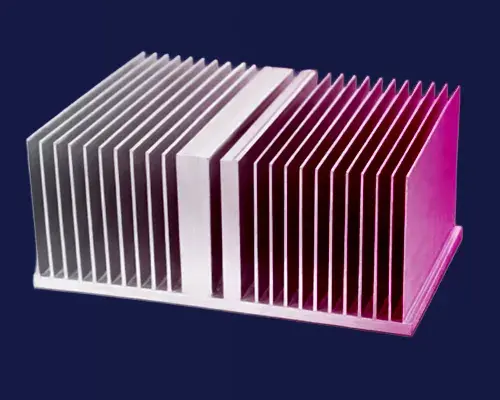
Extruded aluminium is widely used for heat sinks and thermal structures because fin arrays, airflow channels, and mounting geometry can be designed directly into the profile. This reduces part count, improves repeatability, and supports consistent heat transfer across multiple identical assemblies.

Integrated mechanical features for stable assembly

Electronics housings often need more than a simple “box”. Extrusion enables mounting lands, internal rails, ledges, gasket grooves, and alignment features so PCBs, covers, and seals locate consistently without complex fabrication.

EMI/RFI shielding and protected enclosures

Aluminium enclosures are commonly used where electromagnetic shielding matters. With appropriate section design and finishing strategy, extrusions support robust housings that protect sensitive circuitry and provide defined interfaces for lids, seals, connectors, and mounting.

Consistency over length for modular and linear products

Where sheet metal or fabricated assemblies introduce variation, extrusion provides repeatable geometry along length—useful for long housings, linear electronics assemblies, lighting/power tracks, modular enclosures, and multi-station designs.

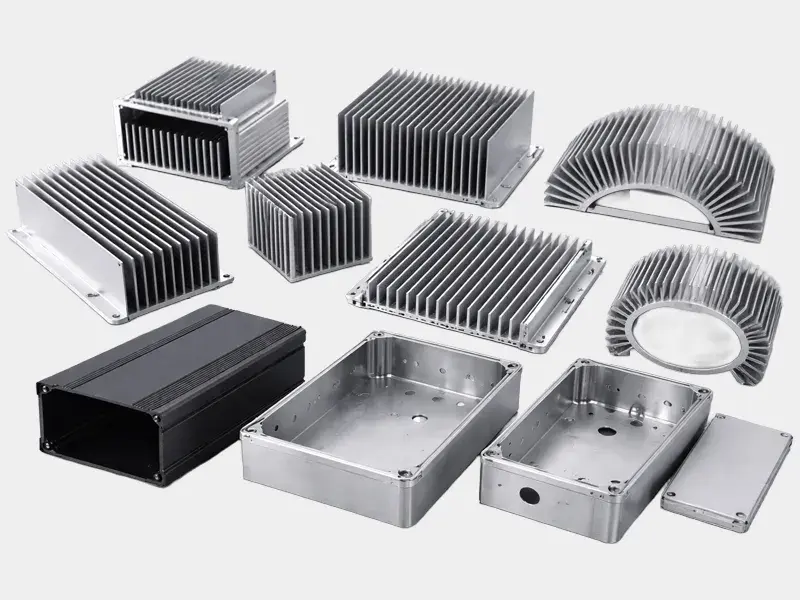
BWC_Profiles_Aluminium_Extrusion_Enclosure_Open_Front
BWC_Profiles_Aluminium_Extrusion_Enclosure_Open_Front_Black
BWC_Profiles_Aluminium_Extrusion_RF_Shielding_Enclosure_Deep_Open_Top
BWC_Profiles_Aluminium_Extrusion_Heat_Sink
BWC_Profiles_Aluminium_Extrusion_Heat_Sink_Split_Vents
BWC_Profiles_Aluminium_Extrusion_Enclosure_Open_Front_Side_Mounts
BWC_Profiles_Aluminium_Extrusion_RF_Shielding_Enclosure_Open_Top_External_Access
BWC_Profiles_Aluminium_Extrusion_Enclosure_Open_Front_Black_Side_Runners
BWC_Profiles_Aluminium_Extrusion_Heat_Sink_Sunken_Vents

Typical Extruded Profile Features for Electronics

Depending on the application, an electronic extrusion profile may include:

  • Heat-sink fins and airflow channels

  • Internal rails/ledges for PCB location

  • Screw bosses and thickened lands for tapping or threaded inserts

  • Cable routes, clip features, or snap locations (design dependent)

  • Lid/gasket grooves and sealing lands (if required)

  • External mounting faces for assembly and thermal interface contact

  • Shielding continuity features and defined mating interfaces (design dependent)


    If you share your assembly constraints, we can advise which features belong in the extrusion and which are better handled as secondary ops.

Tolerances and Inspection for Electronic Extrusions

A cost-effective tolerance strategy focuses control where it affects function—then relaxes non-critical geometry to improve yield and reduce cost. In practice, we will:

  • Define datum surfaces for measurement and machining set-ups

  • Quality assurance applies tight tolerances only to interfaces, fits, and alignment features

  • Keep non-critical dimensions open to improve yield and reduce cost

  • Set realistic straightness/twist expectations for longer lengths (only where function requires it)

Once we understand what must align, seal, slide, mate, or transfer heat, we can recommend which dimensions require close control and where general extrusion tolerances are appropriate.

Design-for-Extrusion Guidance for Electronics

Good electronic sections are stable, manufacturable, and straightforward to machine and finish without damaging functional surfaces. Typical guidance includes:

  • Balance wall thickness to reduce twist and improve stability

  • Use internal radii (avoid sharp internal corners) to support metal flow and die life

  • Avoid sudden thickness changes that increase distortion risk and cost

  • Define critical dimensions only (avoid over-tolerancing the entire section)

  • Consider straightness/twist over length where parts must align or slide

This approach supports more predictable production outcomes and simplifies downstream machining and assembly.

Secondary Operations for Electronic Extrusions

Many electronic profiles require controlled interfaces and assembly features that are best achieved with secondary operations, such as:

  • CNC machining (drill/tap/slots/pockets) for mounting and connector locations

  • Cut-to-length, deburr, and edge breaks for safe handling and repeatable assembly

  • Preparation features for assembly (as required by the design)

  • Protective films and packaging where cosmetic or functional surfaces must be preserved

If you already have a machining strategy, we can validate whether the profile geometry supports robust fixturing and efficient cycle times.

Finishing and Handling for Electronics

Finish selection depends on operating environment, shielding requirements, cosmetic expectations, and interface needs. Common finishing options and considerations include:

  • Anodising for durability, surface protection, and controlled appearance

  • Powder coating where appropriate for environment and cosmetics

  • Clear definition of masking / “do not coat” zones on critical interfaces

  • Packaging that protects fins, sealing lands, and machined features in transit and assembly

Where electrical continuity or EMI performance is critical, finishing strategy should be agreed early to avoid rework and performance risk.

Why Work With Us

You will get the best outcome when extrusion, machining, finishing, inspection, and packaging are treated as one engineered route. We support that end-to-end approach so the profile you design is the profile you can manufacture and assemble—repeatably.

Talk to an expert:
Contact us with your drawing, target quantities, operating environment, and any critical interfaces (thermal faces, gasket lands, PCB rails, connector zones). We will respond with practical recommendations on section stability, tolerance strategy, machining approach, and finishing/handling.

Electronic Engineering Aluminium Extrusions FAQs

What is an aluminium extrusion used for in electronic engineering?

Aluminium extrusions are commonly used for heat sinks, electronics housings, modular enclosures, structural rails, and profiles that integrate mounting, alignment, and sealing features into a single repeatable section.

Can aluminium extrusions provide EMI/RFI shielding?

Yes. Aluminium enclosures are often used for shielding. Performance depends on enclosure design, mating interfaces, continuity across joints, and finishing/masking strategy where conductivity is required.

How do I choose tolerances for an electronic extrusion?

Start by identifying critical-to-function interfaces (alignment faces, PCB rails, gasket lands, connector locations, thermal contact surfaces). Tighten only those; relax non-critical geometry to reduce cost and improve yield.


When should features be extruded versus machined?

Use extrusion for features that run along length (rails, channels, fins, grooves). Use CNC machining for discrete features (holes, tapped bosses, pockets, connector windows) and where interface control is required.

Which finishes are common for electronic extrusions?

Anodising is common for durability and appearance. Powder coating can be suitable depending on environment and interface needs. Masking is often required on mating faces, gasket lands, or conductivity-critical areas.

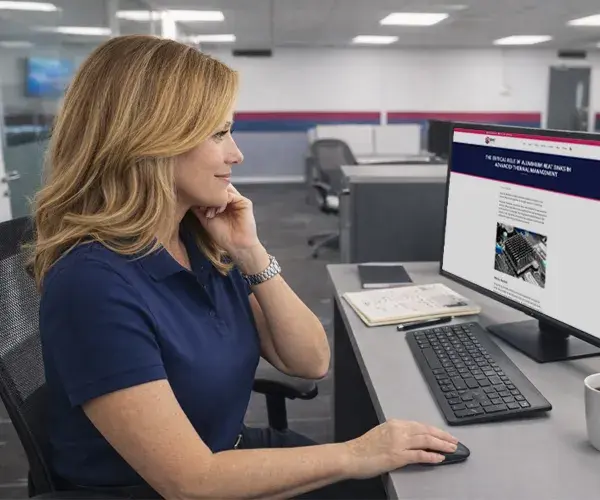
BWC_Profiles_Lady_Reading_Aluminium_Heat_Sink_Blog

A MUST-READ BLOG:THE CRITICAL ROLE OF ALUMINIUM HEAT SINKS IN ADVANCED THERMAL MANAGEMENT

Read this complete in-depth into the importance of aluminium in advanced thermal management through heatsinks.

You will read about what heat sinks are, why aluminium is used, a comparison with aluminium v copper, and much more.