.png?width=150&height=70&name=BWC%20Logo%20(Custom).png)
What Quality Assurance Really Means - And How BWC Profiles Delivers
Quality Assurance (QA) in aluminium extrusion is not a slogan, a badge, or a line on a website. It is an outcome that reveals itself under pressure — on site, on the production line, and in the finished build.
It shows up in moments that matter: when profiles align without persuasion, when assemblies go together first time, when finishes survive handling and installation, and when projects move forward without the quiet tax of rework, fettling, shimming, rejected coating, or late-stage compromise.
When extrusion quality is wrong, the cost is rarely confined to the extrusion itself. It spreads — into labour, programme risk, finishing failure, and reputation. That is why real quality assurance is not a final inspection step. It is a leadership discipline.
At BWC Profiles, we define quality assurance as a controlled, end-to-end system:
design intent → alloy & temper → tooling → process control → dimensional verification → fabrication → finishing → traceability and corrective action
Break one link, and the outcome becomes unpredictable. Control the chain, and quality becomes repeatable.
Our objective is simple — and deliberately demanding: make quality consistent, not occasional.
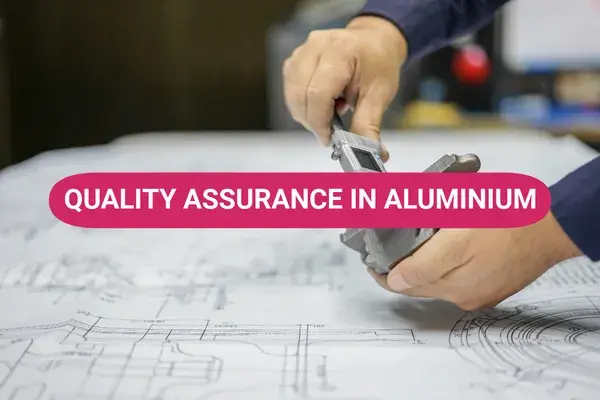
Quality Starts Long Before Aluminium Reaches The Press
By the time aluminium reaches an extrusion press, the quality outcome has already been largely decided.
Most extrusion problems are only discovered during installation — when parts do not align, when interfaces fight back, or when cosmetic expectations are suddenly unmet. But these problems are almost never created at that stage. They originate much earlier, during design, when decisions are made that either respect the realities of aluminium extrusion or quietly ignore them.
Profiles fail not because aluminium is unpredictable, but because it is asked to do things it cannot do consistently:
- abrupt wall thickness transitions that disrupt metal flow
- sharp internal corners where radius is unavoidable
- unsupported tongues, deep grooves, or extreme aspect ratios
- unplanned cosmetic faces
- finishing allowances ignored until it is too late
Designing without extrusion discipline builds variation into the part before the first billet is ever heated.
This is why BWC Profiles begins with design assistance grounded in real production experience, including the cutting, qualification, and management of thousands of extrusion dies. Geometry is challenged early — not to slow projects down, but to stabilise them.
Find out more about our Extrusion Design Assistance here.
Where confidence is required, guesswork is removed entirely. Prototyping, whether through 3D-printed sections or controlled initial production runs, allows fit, function, and interfaces to be proven before volume, tooling investment, and programme commitments are locked in.
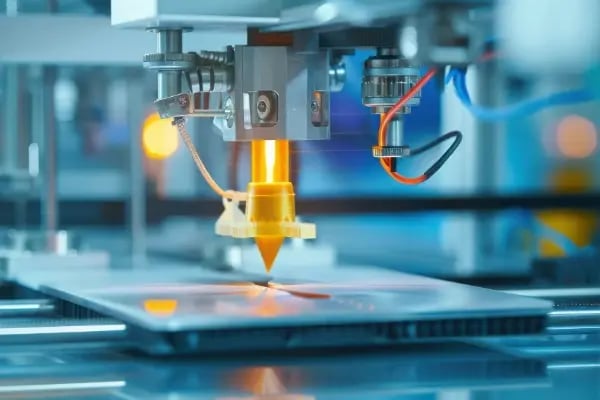
Quality leadership means stopping problems where they begin — not managing them where they appear.
Alloy & Temper: Where The Quality Outcome Is Set
Once the geometry is sound, the next quality decision is less visible — but no less decisive.
Alloy and temper selection determine how a profile behaves throughout its life: during extrusion, fabrication, finishing, installation, and long-term service. A profile can measure correctly and still be the wrong component if the alloy or temper does not match the application. Learn more about alloys, tempers, and extrusion behaviour here.
This is where quality assurance moves from abstract specification to applied engineering judgement.
The right questions must be answered clearly:
- Is strength, corrosion resistance, machinability, conductivity, or formability dominant?
- Is the application structural, decorative, thermal, or hybrid?
- Will the profile be anodised, powder coated, wrapped, polished, or left mill finish?
- What mechanical properties must be achieved — and demonstrated?
Industry standards exist because quality requires a shared language. Dimensional tolerances, form limits, mechanical properties, delivery condition, and inspection requirements are defined precisely to remove ambiguity. QA is the discipline of applying those standards correctly — not loosely, and not selectively.
Tooling Discipline: Where Repeatability Is Won Or Lost
Aluminium extrusion is a tooling-led process. Once a die is cut, it becomes the physical embodiment of every design and quality decision made up to that point.
If tooling is poorly designed, poorly maintained, or treated as a consumable inconvenience rather than a controlled asset, quality issues are inevitable. No amount of downstream inspection can compensate for instability introduced at the die.
Loss of tooling discipline expresses itself immediately:
- die lines and surface tearing
- twist, bow, and camber
- inconsistent wall thickness
- dimensional drift along the length
Strong quality assurance treats tooling as a controlled, managed asset, not something to be worked around. This is one reason BWC Profiles does not operate as a transactional metal supplier. We manage extrusion projects as integrated systems — from die design and sourcing through extrusion, fabrication, finishing, and verification.
Repeatability does not come from hope. It comes from discipline.
Learn more about the tooling-led process here.

Process Control: Quality Is A Stable Window, Not Luck
With sound design and disciplined tooling in place, quality is then created — or destroyed — by process control.
Extrusion is not forgiving of drift. Even with the right alloy and the right die, results depend on holding the process within stable, well-understood operating windows. When those windows are respected, quality becomes predictable. When they are ignored, defects appear quickly and repeatedly.
Critical variables include:
- billet temperature
- press speed and pressure
- lubrication
- quench control
- puller stability
- stretch straightening
- ageing and heat-treatment discipline
Billet temperatures typically sit in the 400–500 °C range, depending on alloy and geometry. Outside the correct window, instability shows up immediately — as surface defects, dimensional variation, and inconsistency between runs.
This is why quality assurance is not synonymous with measurement. Measurement confirms outcomes; process control creates them.
Dimensional Accuracy: The Definition That Actually Matters
Ultimately, quality is judged at the point of use.
Customers do not buy aluminium profiles as isolated components. They buy systems that must assemble smoothly, align predictably, and perform without intervention. From that perspective, dimensional accuracy is not an internal metric — it is the lived experience of installers, fabricators, and end users.
True dimensional quality means one thing: it fits, every time.
Quality assurance therefore focuses on the dimensions and forms that actually govern function:
- critical cross-sectional dimensions
- straightness, twist, bow, and camber
- cut-length accuracy
- machined features and positional tolerance
- interface geometry — channels, tracks, snap details, fixing points
Tolerances are not subjective. They are defined against recognised standards and verified accordingly.
Learn more about BWC Profiles' Quality Assurance policies.
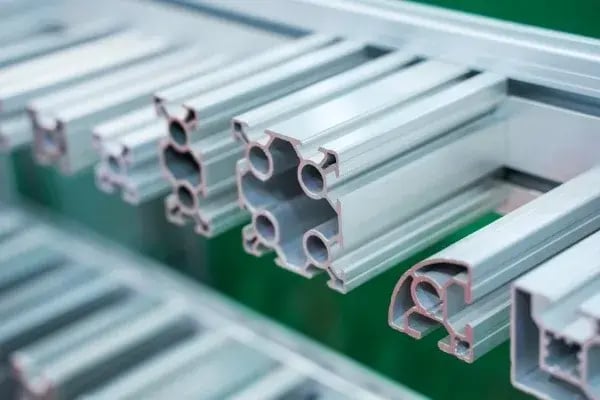
Precision verification at BWC Profiles
Where high confidence is required, BWC employs dedicated inspection capability designed specifically for aluminium profiles, including a Kreon Baces 3.2 m six-axis CMM, producing full 3D inspection reports to confirm compliance against specification.
This is verification with intent — not box-ticking.
Surface Quality: Cosmetic Performance Designed In
Dimensional compliance alone does not define a successful extrusion.
For many applications — particularly architectural, consumer-facing, or premium products — surface quality is the first thing noticed, and the fastest way quality is judged. Like dimensional performance, it cannot be rescued at the end if it was not considered from the beginning.
Surface quality demands explicit control:
- cosmetic zones must be defined and agreed
- geometry must support the intended finish
- handling and packing must prevent damage
- fabrication marks must be controlled before finishing
Many surface defects are created long before coating or anodising begins. BWC’s design guidance addresses this directly, because prevention is always cheaper — and more reliable — than rejection.
Fabrication: Quality Doesn't End At Extrusion
Extrusion defines the profile shape. Fabrication determines whether it becomes a usable component.
A profile can leave the press fully compliant and still fail if cutting, machining, or handling are inconsistent. For this reason, quality assurance must extend beyond extrusion itself.
QA therefore includes control of:
- cutting and machining accuracy
- repeatability of drilled and tapped features
- burr control and edge condition
- part protection during handling, storage, and transport
At BWC Profiles, fabrication and machining operate within the same managed system as extrusion and finishing, delivered by an experienced in-house team. Quality is preserved — not handed off.
Finishing - For Performance As Well As Decoration
Finishing is not just for decoration, it is a performance critical process that directly affects durability, corrosion resistance, and long-term appearance.
It is also where weak supply chains are exposed fastest — because coating quality depends on preparation, discipline, and inspection, not colour selection.
Powder coating performance is driven by:
- surface condition and contamination control
- pre-treatment quality
- controlled application and cure
- inspection at defined checkpoints
- handling after cure
At BWC Profiles we provide powder coating alongside anodising, foil wrapping, and polishing, with support for bespoke requirements such as masking and threaded features. Profiles are inspected after pre-treatment and during coating, with the ability to hand-spray where required.
Pre-treatment is treated as critical infrastructure, not an afterthought — because it governs adhesion, durability, and corrosion resistance.
Anodising quality focuses on:
- coating thickness and uniformity
- corrosion and abrasion resistance
- batch-to-batch consistency
- alloy suitability for the required aesthetic
International standards and recognised quality labels exist to define how anodised finishes are specified, tested, and verified. QA is the discipline of working within these frameworks — consistently.

Traceability, Corrective Action, & Consistency Over Time
However strong the individual processes are, quality assurance ultimately stands or falls on one question: can you do it reliably over time, and prove it?
Traceability is what makes that possible. A controlled system links:
- each extrusion batch to its alloy, temper, and supplier lot,
- each die to its maintenance and modification history,
- each production run to its key process parameters,
- each finished profile to inspection records and finishing route.
When something goes wrong — or even looks unusual — this traceability turns guesswork into diagnosis. Instead of 'it just happened', there is a clear path to understand where, why, and how a deviation occurred.
Corrective action then has substance. Non-conformances are not simply reworked or scrapped; they are investigated. Root causes are identified, countermeasures are implemented, and checks are put in place to prevent recurrence.
Consistency over time is the result of this discipline. It is not enough to produce one good batch under perfect conditions. Projects run across months and years, often with changing volumes, evolving designs, and new environmental pressures. A serious QA system absorbs this reality and still delivers stable outcomes.
At BWC Profiles, this is supported by:
- a formal quality management system aligned with ISO 9001:2015,
- regular internal and external audits,
- an MRP system that monitors critical resources and routes orders through defined production and inspection stages,
- and a culture in which quality is not confined to a single department. Every stage — from enquiry and design through to packing and despatch — carries explicit responsibility for maintaining standards.
Quality assurance, in other words, is not a form. It is a way of running the business.
Conclusion: What Quality Really Means In Practice
Quality in aluminium extrusion is not about winning an argument on paper. It is: what happens when profiles leave their drawings and enter the real world. You see it when installers do not have to fight a system to make it fit. It is also evident when a façade or framework sits exactly as it was intended to sit: straight, aligned and consistent. And quality clearly shows when a coating still performs years later because the preparation and process behind it were correct, and when subsequent orders behave like the first one did.
Seen this way, quality assurance stops being an abstract concept and becomes something very practical: the work of removing uncertainty. Uncertainty is removed at the design stage by challenging geometry and clarifying when critical dimensions truly matter. Uncertainty is also removed in alloy and temper choice by matching performance carefully to the application rather than defaulting to habit. In tooling and process, this works by treating them as controlled systems with defined operating windows instead of variables to be worked around. In measurement and finishing, uncertainty is removed by defining standards clearly and then checking against them in a consistent way. And overall, over time, uncertainty is removed through traceability and corrective action that actually changes how future work is done.
This is how BWC Profiles understands quality in aluminium extrusion. Not as a claim, but as a chain of decisions and controls that show up where it counts — in the field, in the factory, and in the reputation of every project that carries our profiles.
If you are developing a new profile, reviewing an existing system, or simply want to test whether your current specification is giving you the certainty you think it is, the most useful conversation is the one held early. That is where quality is easiest to build in — and hardest to lose.